FAQ
Straight answers to real questions.
Treatment questions patients ask us, answered in plain words by the dentist.
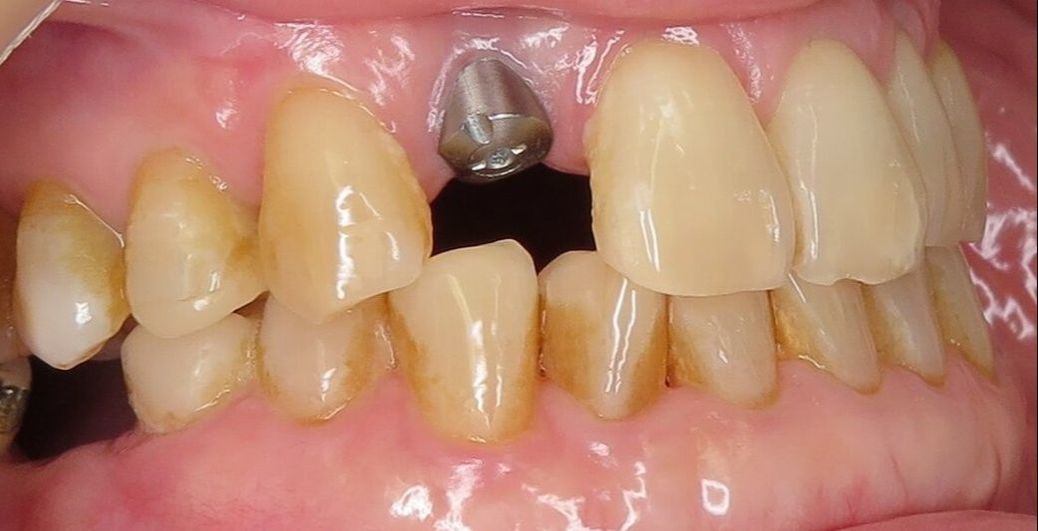
Can I get dental implants?
It depends on both the quantity and the quality of your bone. Implants must be screwed into bone, not thin air, so you need enough of it. And if the bone is too soft, the implant may have difficulty staying stable enough to osseointegrate (bond with the bone).
Our 3D X-rays can very accurately determine the quantity of bone. The quality of bone remains unknown until the time of surgery.
Are metal fillings bad for me?
The official dental answer in Australia is still currently no. Metal fillings (dental amalgam) are a mix of metals, usually mercury, silver, tin, copper and trace metals. Most official bodies, including the Australian Dental Association, still consider amalgam relatively safe, because the doses involved are low.
Options Dental Care chooses to be an amalgam free surgery. Not because we view it as toxic, but because there are vastly superior materials in this millennium. We use fully bonded materials: usually composite resin, or bonded ceramic inlays and onlays made by our in-house CEREC Omnicam.
How old is too old to straighten my teeth or improve my smile?
There really isn't an upper age limit. Straightening is usually done with orthodontics, but crowns and veneers can also be used. It depends on what you want and the time and money you're comfortable committing. We've had many patients in their 60s having adult orthodontic work, and people in their 80s getting new bridges.
Are X-rays harmful?
The doses used by modern X-ray machines, especially in dentistry, are so small that the increased risk is tiny compared with the risk of missing a problem. We follow the ALARA principle: a dose as low as reasonably achievable.
In dentistry, the radiation from X-rays should be one of the least of your worries.
Why don't my dentures fit?
Simply put, dentures just don't fit like natural teeth: there's too much inaccuracy along the way. That doesn't mean you can't wear them and be happy; it comes down to expectations. Complete upper and lower dentures give only about 25% of the chewing capacity of a full set of natural teeth.
Our dentists usually don't make dentures: we have an in-house dental prosthetist who treats patients directly, which helps you save money. If you're still not happy with dentures, it may be time to consider implants.
Do implants feel like teeth?
No, they don't, but they're the closest thing we have to the look and function of natural teeth. Implants aren't living, so they have no spatial awareness, and their round "roots" often mean more food trapping, so cleaning and flossing need slight adjustments. They really are the next best thing once natural teeth are lost.